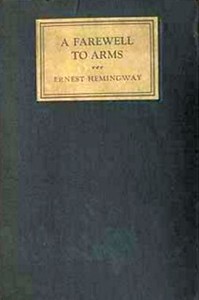
A farewell to arms
About this book
There’s a scene in *A Farewell to Arms* where the narrator, an ambulance driver on the Italian front, tries to sleep in a dark room while a battle rumbles outside. The prose is short, almost blunt. That’s the reason to read it today: Hemingway wrote this novel in a style that doesn’t ask you to wade through ornament. Every sentence lands like a clean, hard object. For a restless reader, that clarity is a gift—the story moves, the dialogue snaps, and the emotional weight arrives without warning.
For this book, FocusReader’s **line dimming** is your best friend. Hemingway’s paragraphs are often just a few lines long, but his scenes can stretch. Dim the lines above and below your reading line, and you’ll track the action without your eyes jumping back. If the long stretches of war or hospital routine start to blur, use a **pomodoro sprint**—fifteen minutes, one chapter. That’s all it takes.
A note: this is not a romance in the warm sense. The love story is real, but the ending is famously brutal. Some readers find it cold. If you need comfort, look elsewhere. If you want a book that respects your attention and doesn’t flinch, this one will hold you.
- Little Women; Or, Meg, Jo, Beth, and Amy — Alcott, Louisa May
- The Great Gatsby — Fitzgerald, F. Scott (Francis Scott)
- War and Peace — Tolstoy, Leo, graf
FocusReader opens A farewell to arms in a reading surface tuned for restless attention:
- Anchor emphasis — a bold front-half on each word steadies your eye.
- Read-aloud — sentence by sentence, with the line highlighted, free.
- Page-flip mode — a real page at a time, not endless scroll.
- Pomodoro sprints — short, finishable reading blocks.