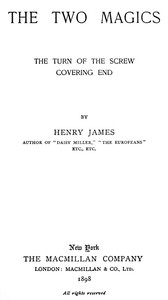
The Two Magics: The Turn of the Screw, Covering End
About this book
Henry James's *The Turn of the Screw* is the rare ghost story that works not by showing you the monster, but by making you doubt the person holding the flashlight. A governess arrives at a remote English estate, convinced the two children are being haunted by the dead servants she never met. The book earns its reputation not from shocks, but from the slow, cold drip of ambiguity: is she seeing spirits, or is her own unraveling mind the real horror? For a restless reader, this is worth reading today because it weaponizes your own wandering attention—every stray thought becomes a clue you might have missed.
FocusReader’s anchor emphasis is the key here. James’s sentences are long, layered, and deliberately slippery. Anchor a phrase like “I saw my companion’s face” and the line dimmer keeps you from losing your place in the thicket of his prose. The pomodoro sprint also fits: fifteen-minute chunks let you absorb the dread without the fatigue of tracking a single, unbroken paragraph.
A fair warning: this is not a fast read. James’s style can feel fussy, and the ambiguity frustrates readers who want a clear answer. That uncertainty is the point—but it’s also why some put it down. If you’re in the mood to sit with discomfort rather than escape it, this story will stay with you long after you close the book.
- The Turn of the Screw — James, Henry
- Jane Eyre: An Autobiography — Brontë, Charlotte
- Pride and Prejudice — Austen, Jane
FocusReader opens The Two Magics: The Turn of the Screw, Covering End in a reading surface tuned for restless attention:
- Anchor emphasis — a bold front-half on each word steadies your eye.
- Read-aloud — sentence by sentence, with the line highlighted, free.
- Page-flip mode — a real page at a time, not endless scroll.
- Pomodoro sprints — short, finishable reading blocks.