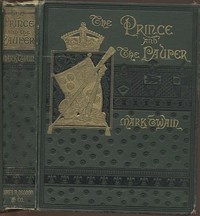
The Prince and the Pauper
About this book
Twain wrote *The Prince and the Pauper* as a kind of social thought experiment: what if a king and a beggar boy swapped lives? It’s a book about how arbitrary privilege is — and how quickly it can vanish. For a restless reader, that premise is the hook. You don’t need to wade through long descriptions of Tudor England. The story moves on the tension of two boys trying not to get caught, and Twain’s satire cuts through the pomp.
The language is period-flavored but not dense, so read-aloud with sentence-sync is helpful here — it keeps you moving through dialogue-heavy scenes without losing the thread. If your attention drifts during the longer stretches of court intrigue, try page-flip mode with a short pomodoro sprint. The chapters are short enough that 10 minutes gets you through a full scene.
One honest note: this is not Twain’s best book. It’s sentimental in places, and the moral lessons can feel heavy-handed. If you’re looking for *Huckleberry Finn* levels of bite, you might be disappointed. But if you want a fast, clever fable about identity and class, it earns its place.
- A Tale of Two Cities — Dickens, Charles
- Oliver Twist, Vol. 2 (of 3) — Dickens, Charles
- Alice's Adventures in Wonderland — Carroll, Lewis
FocusReader opens The Prince and the Pauper in a reading surface tuned for restless attention:
- Anchor emphasis — a bold front-half on each word steadies your eye.
- Read-aloud — sentence by sentence, with the line highlighted, free.
- Page-flip mode — a real page at a time, not endless scroll.
- Pomodoro sprints — short, finishable reading blocks.