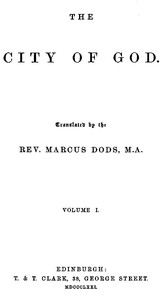
The City of God, Volume I
About this book
Augustine wrote *The City of God* in the wake of Rome’s sacking in 410 AD, when Romans blamed Christians for the empire’s fall. That context makes this book startlingly relevant today: it’s an argument that no earthly empire, no matter how stable, is the final home for anyone. If you’ve ever felt like the world is unraveling and wondered where to anchor your attention, Augustine offers a patient, philosophical case for a different kind of citizenship—one built on hope, not on the news cycle.
The book is long and dense, with arguments that loop through theology, history, and Roman politics. That’s where FocusReader’s pomodoro sprints help: set a 20-minute timer, read a few pages, then pause. The line-ruler keeps your eyes from skimming over Augustine’s layered sentences. And when the Latin-influenced prose gets thick, the free read-aloud with sentence-sync can carry you through the tougher passages without losing the thread.
Honest note: this is a work of Christian apologetics, not a neutral history. Augustine writes from conviction, and readers outside that tradition may find some sections preachy or dated. But if you can sit with his questions—about justice, loyalty, and what we really love—the book rewards patience.
- The Confessions of St. Augustine — Augustine, of Hippo, Saint
- Hegel's Lectures on the History of Philosophy: Volume 3 (of 3) — Hegel, Georg Wilhelm Friedrich
- Meditations — Marcus Aurelius, Emperor of Rome
FocusReader opens The City of God, Volume I in a reading surface tuned for restless attention:
- Anchor emphasis — a bold front-half on each word steadies your eye.
- Read-aloud — sentence by sentence, with the line highlighted, free.
- Page-flip mode — a real page at a time, not endless scroll.
- Pomodoro sprints — short, finishable reading blocks.