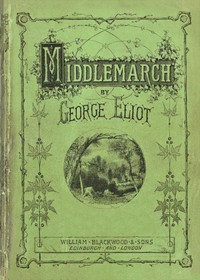
Middlemarch
About this book
Most of us are familiar with the feeling of wanting to be a better person and then, quietly, failing at it. *Middlemarch* is the book that understands this better than any other. It’s not a plot-driven novel; it’s a deeply patient, almost scientific study of how good intentions meet the friction of small-town life, marriage, and money. Reading it today feels like having someone finally explain why your own life is so tangled.
This is a long, dense book with Victorian prose and a huge cast. The best way to read it is in focused sprints. Use FocusReader’s **pomodoro timer** to read for 25 minutes, then rest. The **line-dim** feature will keep your eyes from jumping ahead when Eliot lingers on a character’s inner thought. And when you hit a passage of difficult vocabulary or a long moral argument, switch on the **read-aloud** with sentence-sync. Hearing it spoken can make the rhythm of the language click.
Honest note: If you need a fast plot with constant action, this will feel slow. Some readers find Eliot’s narrator too omniscient, even moralizing. But if you’ve ever felt lonely in your own striving, *Middlemarch* is a companion, not a lecture.
- Pride and Prejudice — Austen, Jane
- Pride and Prejudice — Austen, Jane
- Wuthering Heights — Brontë, Emily
FocusReader opens Middlemarch in a reading surface tuned for restless attention:
- Anchor emphasis — a bold front-half on each word steadies your eye.
- Read-aloud — sentence by sentence, with the line highlighted, free.
- Page-flip mode — a real page at a time, not endless scroll.
- Pomodoro sprints — short, finishable reading blocks.