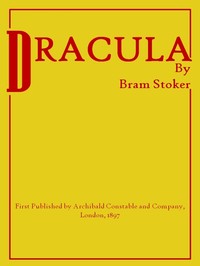
Dracula
About this book
If your attention wanders, the epistolary form of *Dracula* is a gift. The story arrives in fragments—diary entries, ship logs, telegrams, phonograph recordings—each one a short, contained burst of dread. You never settle into a single voice long enough to drift. Instead, you piece together the horror like evidence, which is exactly how the characters themselves experience it. It’s a novel that rewards the restless reader by making the gaps in attention feel like part of the investigation.
FocusReader’s anchor emphasis is ideal here. The novel’s famous passages—the Count crawling down the castle wall, the wolf at the window—land harder when you can lock your eye on a single sentence and let the rest dim. For the long, formal Victorian stretches (Harker’s journal, Mina’s meticulous notes), a Pomodoro sprint keeps you from bogging down. And if archaic medical jargon or dialect trips you up, the read-aloud with sentence-sync will carry you through without losing the thread.
Be warned: the pacing is slow by modern horror standards. The terror is atmospheric, not jump-scare. If you need constant action, this will feel like waiting for a storm that takes its time breaking.
- The Mysteries of Udolpho — Radcliffe, Ann Ward
- Frankenstein; or, the modern prometheus — Shelley, Mary Wollstonecraft
- The strange case of Dr. Jekyll and Mr. Hyde — Stevenson, Robert Louis
FocusReader opens Dracula in a reading surface tuned for restless attention:
- Anchor emphasis — a bold front-half on each word steadies your eye.
- Read-aloud — sentence by sentence, with the line highlighted, free.
- Page-flip mode — a real page at a time, not endless scroll.
- Pomodoro sprints — short, finishable reading blocks.